Septic Tank General Binding Rules: What Chichester Homeowners Must Know
Many rural homes around Chichester, from Funtington to Sidlesham, still rely on a septic tank. Since the Environment Agency's General Binding Rules came into force, owners have a clear legal duty to make sure their system is not polluting local water. Here is what that means in practice.
What are the General Binding Rules?
The General Binding Rules are a set of conditions for small sewage discharges in England. If your system meets them, you do not need an environmental permit. If it does not, you must either upgrade it or apply for a permit.
The key rule for septic tanks is that they must not discharge directly into a ditch, stream or other surface water. Septic tank effluent should go to a drainage field (infiltration system) in the ground instead.
Signs your Chichester system may not comply
Older properties on the coastal plain often have tanks installed decades ago. Common warning signs include:
- An outlet pipe that runs to a ditch or watercourse
- No record of a drainage field ever being installed
- Wet, smelly ground or lush green patches over the outlet
- A tank that needs emptying far more often than once a year
Your options if you need to upgrade
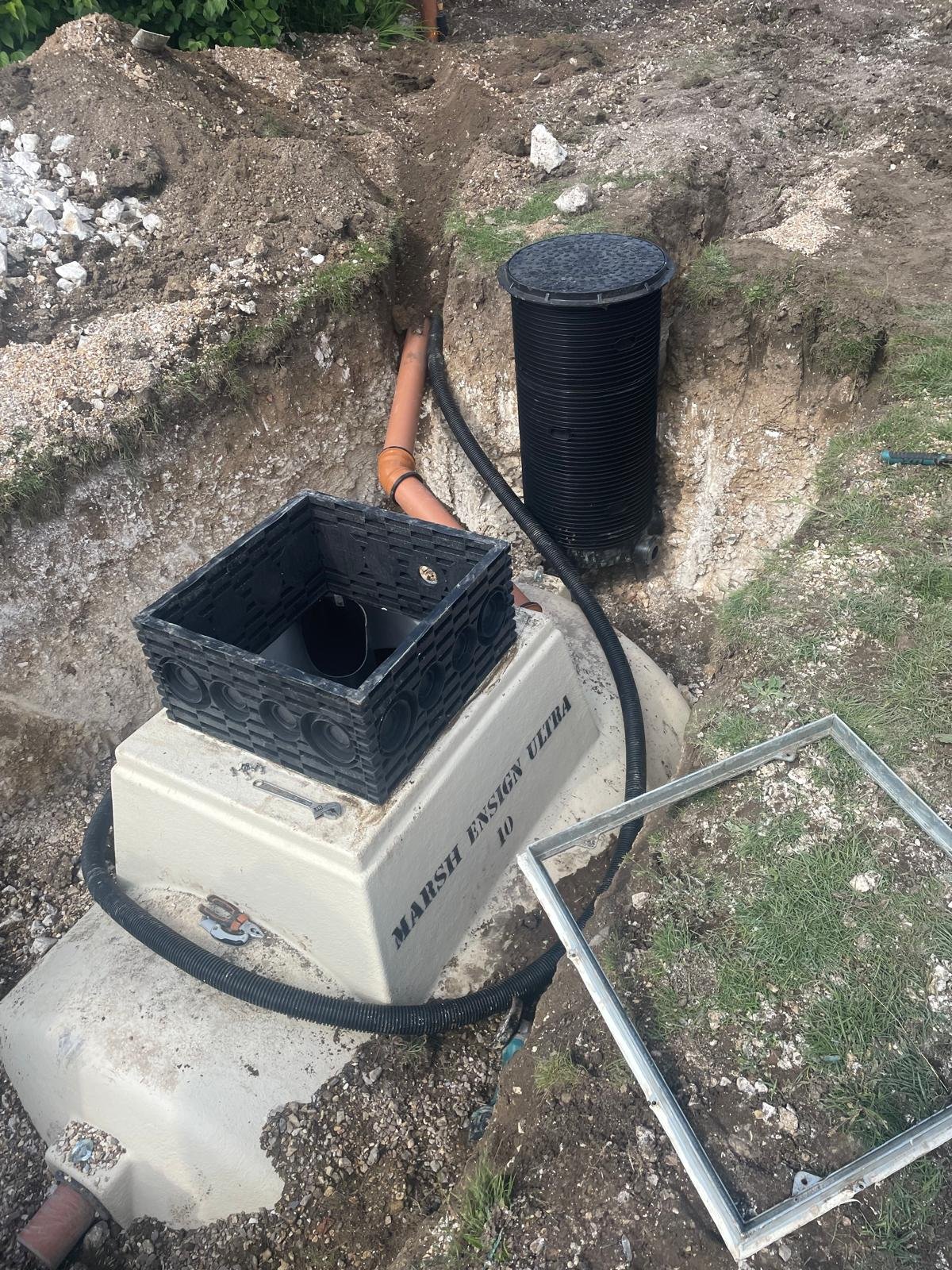
There are usually three routes: install a new drainage field, replace the septic tank with a sewage treatment plant that can discharge to a watercourse, or connect to the mains sewer where it is close enough.
We start with a site survey and, where needed, a percolation test so we can recommend the option that suits your ground conditions and budget.
Frequently asked questions
Do I have to upgrade if I sell my house?
Yes. Responsibility for a non-compliant system must be dealt with when a property is sold, so it is often raised by the buyer's surveyor or solicitor.
Who is responsible for the septic tank?
The operator, which is usually the property owner. If a system is shared, every user shares responsibility.